
Category: Car Maintenance

on

When browsing car boards or speaking to diesel truck fanatics, you may have heard the term “EGR delete or removing it”. It’s one of the most talked-about and arguable modifications within the car world. But what is an EGR delete, and why is it this sort of large deal?

Here, you will know what an EGR delete does, how it influences your car, and whether or not it’s a clever move for your car or truck. You’ll also explore the advantages, disadvantages and alternatives to make an informed decision.

What’s the Purpose of the EGR System?

Before understanding what an EGR delete does, it’s important to recognize how the Exhaust Gas Recirculation (EGR) gadget works.

The EGR device is designed to lessen harmful nitrogen oxide (NOx) emissions. It recirculates a small portion of exhaust gases lower back into the engine’s consumption. This lowers combustion temperatures, which in turn reduces NOx output. It’s a vital part of most present-day diesel and gas engines that facilitates them meeting emissions guidelines.

What Is an EGR Delete?

So, what is an EGR delete exactly?

An EGR delete removes or disables the automobile’s Exhaust Gas Recirculation (EGR) gadget. This is commonly performed using an EGR delete package with block-off plates and tuning software programs. The software reprograms the ECU to disregard EGR capabilities and save you blunder codes. This change stops exhaust gases from recirculating and returning into the engine.

What Does an EGR Delete Do?

The idea behind an EGR delete is to improve performance and reliability. Here’s what an EGR delete does?:

  • Increases Engine Efficiency: 

By disposing of the flow of warm exhaust gases again into the consumption, the engine gets cooler, denser air. This results in greener combustion and higher ordinary engine overall performance.

  • Improves Throttle Response and Power: 

Without soot-weighted-down exhaust gases entering the consumption, airflow is cleaner and smoother. This reduces lag and improves throttle response, giving the automobile a significant raise in strength, in particular beneath load.

  • Prevents EGR Valve and Cooler Failures:

EGR valves and coolers are at risk of clogging and failure, specifically in high-mileage motors. Removing the machine eliminates these commonplace failure points, decreasing protection prices and downtime.

  • Enhances Fuel Economy:

Some drivers document higher fuel economy after deleting the EGR device, especially in long-haul or off-avenue situations. This is due to stepped-forward combustion performance and decreased engine drag.

  • Reduces Carbon Deposits Over Time:

With no exhaust gases re-entering the consumption manifold, there’s considerably less carbon buildup within the engine. This allows preserving purifier engine additives and extends the existence of the consumption system and cylinders.

Advantages of an EGR Delete

1. Better Performance

Without exhaust gases entering the intake, the engine runs cleaner and cooler. This can lead to noticeable power gains, especially in turbo diesel engines.

2. Improved Fuel Economy

Some users report a small bump in MPG after deleting the EGR, thanks to more efficient combustion.

3. Fewer repairs

EGR valves and coolers are notorious for clogging up with carbon, especially in diesel trucks. Deleting the EGR system eliminates these weak points.

4. Extended Engine Life

A cleaner engine means less wear over time. Fewer contaminants enter the combustion chamber, reducing the chances of piston and cylinder damage.

Disadvantages of an EGR Delete

Of course, there’s a downside to everything. Here are the risks and disadvantages:

1. Illegal in Many Places

Yes, you read that right. Tampering with emission control systems is a violation of environmental laws in the U.S., Canada, and many other countries. It can result in:

  • Fines
  • Failed inspections
  • Vehicle registration problems

2. Environmental Impact

EGR systems exist for a reason—to reduce smog-forming emissions. Removing it increases NOx pollution, which contributes to poor air quality.

3. Voided Warranty

If your vehicle is still under warranty, an EGR delete will almost certainly void the powertrain coverage.

4. Check Engine Light and ECU Issues

Unless properly tuned, deleting the EGR can cause fault codes, check engine lights, or even limp mode. You’ll need custom ECU tuning to avoid this.

This is in which the discussion becomes controversial—and tremendously depending on how and where you use your car.

Check out also our exclusive vehincles items and softwares.

Is an EGR Delete Worth It?

If you own a song-simple car, a devoted off-avenue vehicle, or a high-performance diesel truck used in managed environments, an EGR delete is probably a sensible preference. In these cases, disposing of the EGR gadget can lead to significant profits in energy, smoother throttle response, improved gas economy, and fewer maintenance problems associated with soot buildup or EGR component failures.

However, in case your automobile is road-criminal and subject to emissions testing or inspections, an EGR delete can create more troubles than it solves. Deleting the gadget is illegal in many areas, inclusive of the U.S., Canada, and plenty of Europe. It can result in hefty fines, failed inspections, lack of registration, and voided warranties. Even if performance improves, the prison and financial dangers might also outweigh the benefits, in particular if your car remains under factory warranty or is frequently driven on public roads.

If you’re dealing with EGR issues but don’t want to risk an illegal mod, consider these options:

  • EGR cleaning: Professional cleaning can restore functionality and prevent carbon buildup.
  • EGR cooler replacement: Upgrading to a more durable cooler can reduce failure rates.
  • ECU tuning: Legal tuning options exist that optimize engine performance without removing emissions systems.

Conclusion

An EGR delete can boost performance and reduce engine issues, but it comes with legal and environmental consequences. For off-road or racing use, it might be a worthwhile mod. However, for daily drivers, the risks often outweigh the rewards. Always weigh the pros and cons carefully before tampering with emissions systems. When in doubt, explore legal alternatives and consult a trusted mechanic.

FAQs

1. Will my check engine light come on after an EGR delete?

Yes, unless your automobile’s ECU is well tuned, you can enjoy fault codes or the take a look at engine light turning on.

2. Can I still pass emissions tests after an EGR delete?

In most cases, no. Deleting the EGR system will likely cause your vehicle to fail emissions inspections.

3. What’s an EGR delete kit?

It’s a set of parts (block-off plates, hoses, and sometimes software) used to remove or disable the EGR system from a vehicle.

4. Can I reverse an EGR delete later?

Yes, but it can be costly and time-consuming, especially if custom ECU tuning was involved.

5. Is there a legal way to improve performance without deleting the EGR?

Yes, professional ECU tuning, regular EGR cleaning, and high-quality fuel and oil can improve engine performance legally.
on

Cars today are more than engines and wheels, they’re also loaded with smart gadgets. One key ingredient to the design is a piece of technology called the ECU, which stands for Engine Control Unit. So if you have ever asked yourself what ECU is on a car or what ECU does,? Here, you will get all the answers to your questions.

What Is the ECU?

Your car’s ECU is the brain of its engine. Like the human brain, your ECU is also responsible for a lot of components and performance of your car engine. The ECU, engine control module, car computer.

So, what is a car ECU? It’s an electronic device that gathers information from sensors in the vehicle. With this information, it issues commands to different parts of the engine to ensure it is performing smoothly, efficiently, and safely.

What Does ECU Stand For in a Car?

ECU is an abbreviation for Engine Control Unit. Some enthusiasts also may call it the car’s vehicle ECU, since there are other control units (TCU for Transmission Control Unit, etc.) in the automobile. Except when we talk ECU, we are typically referring to the one managing the gas engine.

What Does an ECU Do?

The ECU has much important work to do. Here are the main ones:

  1. Regulates Fuel Injection

The ECU assists in the precise ratio of fuel and air for the engine to operate effectively. It modulates how much fuel to inject according to data such as how fast the engine is spinning, the temperature, and how hard you press the gas pedal.

  1. Controls Ignition Timing

The ECU ensures the engine of your vehicle burns the fuel when it’s supposed to, so your vehicle gets from start to finish. using the least amount of fuel needed.

  1. Monitors Emissions 

To help reduce pollution, the ECU controls how cleanly the engine burns fuel. It uses sensors to make sure the engine doesn’t release too many harmful gases.

  1. Controls idle speed

 If your car is stopped but the engine is running (say at a red light ), the ECU keeps the engine idle at a steady speed.

  1. Identify the problem.

If something goes wrong, the ECU turns on the “Check Engine” light and saves a code to help the mechanic figure out what the problem might be.

  1. Improve Fuel Economy

The ECU determines what proportion of fuel to use in every situation so that you get the best possible mileage at the same time as saving fuel.

How Does the ECU Work?

The ECU is connected to various sensors and actuators in the car. Here’s a simple explanation of how it works:

  • Sensors collect data: Sensors are supposed to send out information like engine temperature, air pressure speed, and throttle position.
  • ECU processes the data: It analyzes this data and makes decisions by the map and logic pre-programmed by ECU.
  • Sends commands: The ECU is communicating with the different parts of the engine, like the fuel injectors or the ignition system, to control them in a specific way.

All of this happens in real time, within milliseconds. So your engine always runs at its best.

Where Is the ECU Located in a Car?

The ECU will usually be under the dashboard or behind the glove box/near the engine area; this depends on the make and model of your vehicle. It will normally be housed in a case to prevent it from getting too hot, too wet, and too vibrated.

What is a vehicle ECU?

In modern vehicles, the ECU is essential. It means without it the engine will not run properly or even at all, because every function important to the engine’s operation depends on the ECU. Some cars made prior to the 1980s were mechanical and did not have an ECU, but most modern cars function via electronic control, so the ECU is very important.

What Happens if the ECU Fails?

A damaged or faulty ECU can cause many problems. Here are some signs that the ECU might not be working properly:

  • The check engine light stays on.
  • Engine misfires or stalls
  • Poor fuel efficiency
  • Difficulty starting the car
  • Strange or rough engine behavior

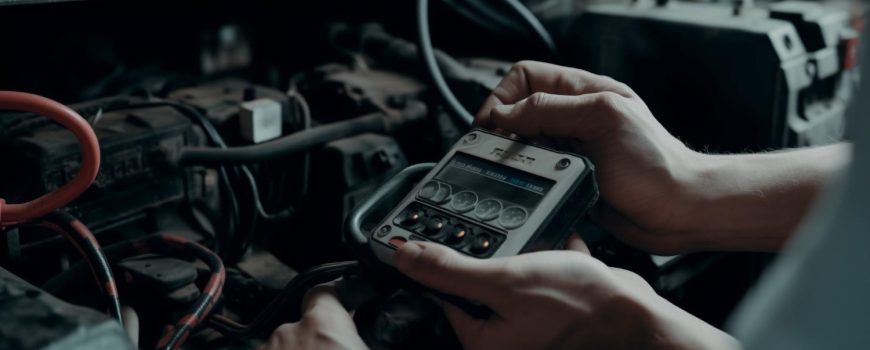
If you notice these issues, it’s best to take your car to a mechanic. They can use a diagnostic scanner to read the trouble codes stored by the ECU.

Can an ECU Be Repaired or Replaced?

Yes, the ECU can be repaired or replaced. Sometimes, only a small part needs fixing, like a broken circuit. Other times, the whole unit might need to be replaced. Replacing an ECU can be expensive, depending on the car model, but it’s necessary if the unit is beyond repair.

In some cases, mechanics can reprogram or reset the ECU to fix software issues without changing the hardware.

Can you tune or upgrade the ECU?

Yes, you can. ECU tuning is when professionals change the software in the ECU to improve performance. This is popular among car enthusiasts who want:

  • More horsepower
  • Better throttle response
  • Enhanced fuel economy
  • Custom driving experience

However, tuning must be done carefully. Wrong settings can damage your engine or void your warranty. Always use a qualified expert for ECU tuning.

Is the ECU the same as a PCM or ECM?

You may have heard other terms like ECM (Engine Control Module) or PCM (Powertrain Control Module). These are similar to an ECU and sometimes used interchangeably.

  • ECM—Usually just controls engine functions.
  • PCM—Controls both engine and transmission functions.

Different car manufacturers use different terms, but the main job is controlling the engine.

Conclusion

The ECU (Engine Control Unit) is the part of your car that reads sensor data and sets fuel, ignition, emissions, and engine health settings. The ECU controls how your car uses fuel efficiently, keeps your engine clean, and runs safely. So if you ‘re driving a compact car or an SUV, it ‘s always working behind the scenes to keep your engine running smoothly. So next time someone asks you about the ECU, you’ll know it ‘s the computer that works to keep your car running well.

Looking to purchase anyting related to car’s then you are in the right spot. Just tab here

FAQs About ECUs

1. What’s the primary use of an ECU in a car?

The main function of the ECU is to control and monitor the efficiency of an engine. To ensure that it runs smoothly, it adjusts fuel injection, ignition timing, emissions, and idle speed according to sensor information.

2. How do I know if my car ‘s ECU is malfunctioning?

Signs of a malfunctioning ECU include the check engine light staying on, engine misfires, poor fuel economy, difficulty starting the car, or rough engine behavior.

3. Can I drive my car with a damaged ECU?

It’s not recommended. If the ECU is damaged, it will fail to run and might even not start at all. You should get it checked by a professional mechanic.

4. How much does it cost to replace an ECU?

Replacement of an ECU can be quite expensive; it can cost $500 to $2,000 (depending on your car make and model), and labor costs can be an additional cost.

In many countries, ECU tuning is legal, but it needs to comply with the local laws, especially emissions. Always check local laws before tuning the ECU of your car.

6. How often should I check my ECU?

The ECU does n’t need regular maintenance on its own, but you still should take it in to have it checked if you notice any issues with the engine or if you see the ‘Check Engine Light.’

7. Can the ECU be upgraded for better performance?

Yes, you can use ECU tuning to get better performance, such as more horsepower, better throttle response, and more fuel efficiency. It ‘s best to do it by a professional, though, as you don’t want to damage the engine.

8. What other systems does the ECU control in a car?

The ECU is primarily responsible for driving the engine, but this can also be connected to other systems (the transmission via the PCM ) and even the brakes depending on the car ‘s design.